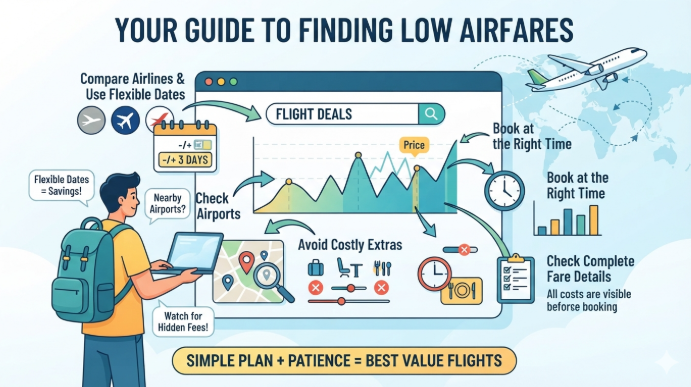
Finding a low airfare can make your whole trip easier. Flight prices can change many times in one day. Small changes in dates, airports, or booking times can lower your total cost. The good news is that you do not need expert travel skills. You only need a simple plan and a little patience. In this guide, we explain practical ways to find cheapest flights for short and long trips. You will learn how to compare airlines, use flexible dates, check nearby airports, and avoid costly extras. We will also cover common booking mistakes that can increase your final price. These tips work for many types of travelers. They can help families, students, business travelers, and solo tourists. Before booking, always check the complete fare details. A cheap ticket is useful only when the final price fits your travel needs.
What Are the Cheapest Flights?
Cheapest flights are air tickets that offer the lowest total price for a specific route and travel plan. However, the lowest advertised fare is not always the cheapest option. Some airlines charge extra for bags, meals, seats, and changes. These fees can quickly increase your final cost. That is why you should compare the full ticket price. Start by checking several airlines for the same route. Then compare departure times, baggage rules, airport locations, and ticket conditions. A slightly higher fare may provide better value. For example, a ticket with free checked baggage can beat a cheaper ticket with expensive bag fees. Travel dates also affect prices greatly. Popular holidays often have higher demand. Quiet travel periods may offer better deals. The best fare depends on your complete trip, not only the number shown during the first search.
Why Do Flight Prices Change So Often?
Airlines use complex pricing systems to manage available seats. Prices can rise when many people search or book the same flight. They can also fall when an airline wants to fill more seats. Demand, competition, season, route popularity, and remaining seats can all affect prices. Special events can also increase demand in a city. Weather problems may affect prices and available routes too. This changing system means there is no guaranteed perfect booking time. Instead, travelers should monitor prices before purchasing. Set price alerts when possible. Compare several dates around your preferred travel day. Also check different airlines before making a decision. Sometimes moving your trip by one day can create a large difference. Other times, the savings may be small. The key is to remain flexible and compare the total travel cost. This approach gives you a better chance of finding cheapest flights without relying on luck.
Best Time to Search for Cheap Airfare
There is no single hour or day that guarantees the lowest airfare. Flight prices depend on many factors, including route demand and airline inventory. Still, searching early can give you more choices. It is especially useful for international trips and popular routes. Start watching prices several weeks or months before your planned journey. This gives you time to understand normal prices for your route. You can then recognize a good deal when it appears. Avoid waiting until the final days if your schedule is fixed. Last-minute tickets can become expensive when demand is high. Flexible travelers have a bigger advantage. You can compare several departure and return dates before booking. Morning, afternoon, and evening flights may have different prices. Try different combinations during your search. A little flexibility can make finding cheapest flights much easier and can also help you choose better departure times.
Use Flexible Travel Dates
Flexible dates are one of the easiest ways to save money on airfare. Many booking platforms allow travelers to compare prices across several days. Use these calendars whenever they are available. You may find that Tuesday costs less than Friday. A return flight on Sunday may cost more than Monday. These differences happen because demand changes throughout the week. School holidays and public holidays can also increase demand. If your schedule allows, avoid the busiest travel dates. Consider traveling a day earlier or later. You can also compare nearby weeks. Sometimes a small schedule change saves enough money to cover other travel expenses. Flexible dates are especially useful for people taking longer vacations. You can select the lowest reasonable fare without changing your destination. When searching for cheapest flights, never check only one fixed date. A wider date search can reveal better options that are easy to miss.
Compare Nearby Airports
Your departure airport can have a major effect on airfare. Large cities often have several airports within driving distance. One airport may offer more airlines or cheaper routes than another. The same idea applies to your destination. A nearby airport could provide lower ticket prices. However, you should calculate transportation costs before booking. A cheaper flight is not useful if the airport transfer costs more than the savings. Check trains, buses, taxis, and rental cars when comparing airports. Also consider travel time and convenience. Some smaller airports are farther from city centers. Others may have limited public transportation. Look at the complete journey from your home to your final destination. This gives you a more realistic comparison. Checking alternative airports is particularly useful for international travel. It can sometimes reveal cheapest flights that do not appear when you search only for the main airport.
Compare Airlines Before Booking
Never assume that one airline always offers the lowest fare. Different airlines may have different prices for the same route. Their baggage rules and ticket conditions can also vary. Some airlines offer basic fares with limited services. Others include checked bags, meals, or seat selection. Compare the total value before choosing your ticket. Look at the departure and arrival times too. A very cheap flight with a long overnight layover may not be ideal. Also check the number of stops. Direct flights usually save time but can cost more. Connecting flights may offer better prices. However, longer connections can increase travel stress. Read the fare conditions carefully before payment. Check whether changes or cancellations are allowed. When comparing cheapest flights, focus on the complete experience. The lowest number is not always the best deal. A slightly higher fare may save money and trouble later.
Search One-Way and Round-Trip Tickets
Many travelers automatically search for round-trip tickets. This can be convenient, but it is not always the lowest-cost option. Sometimes two separate one-way tickets can provide better value. You may find a cheap outbound flight with one airline. Another airline might offer a better return fare. Compare both options before booking. However, separate tickets can create additional risks. If one flight changes, the other airline may not protect your connection. You may also need to collect your luggage during separate journeys. Leave enough time between unrelated flights. For international travel, check visa and entry rules as well. Always compare the final price after adding baggage and other fees. A round trip may still provide better value in many cases. The important point is to avoid assumptions. Search multiple combinations before making your choice. This method can sometimes help travelers discover cheapest flights while keeping their plans flexible.
Use Flight Price Alerts
Price alerts can make airfare shopping much easier. Instead of checking prices every few hours, you can monitor a route automatically. Many travel search services provide alert features. You can enter your destination, dates, and preferred route. The service can then notify you when prices change. This is helpful when your travel date is still flexible. Price alerts also help you understand normal fare levels. Suppose you watch a route for several weeks. You may notice that prices usually stay within a certain range. A sudden drop can then become easier to recognize. Do not book only because an alert says the price changed. Check the full fare and travel conditions first. Prices can move again after you receive an alert. It is also useful to compare the fare directly with the airline. With regular monitoring, price alerts can improve your chances of finding cheapest flights without spending hours searching every day.
Consider Connecting Flights
Direct flights are usually easier and faster. However, connecting flights can sometimes cost less. If your schedule is flexible, compare both options. A connection may add several hours to your journey. It can also introduce a greater chance of delays or missed connections. For that reason, do not choose a connection based only on price. Check the connection length and airport carefully. Very short connections can be risky. Very long connections can make your trip tiring. If separate tickets are involved, leave even more time between flights. Check baggage rules for every airline. Also confirm whether you need to pass immigration during a connection. These details can affect your travel experience. For some routes, a connection can provide significant savings. For others, the price difference may not justify the extra time. When comparing cheapest flights, balance ticket price against travel time, comfort, and connection risk.
Travel During Less Busy Seasons
Travel demand has a strong effect on airfare. Popular periods often bring higher prices because more people want to travel. These periods can include school breaks, major holidays, and large events. Traveling during quieter periods may give you more affordable choices. Weather and local tourism seasons also matter. Some destinations have high demand during summer. Others become busy during winter. Research your destination before selecting travel dates. You should also check local events that could affect hotel and flight prices. A destination can become expensive during festivals or major conferences. Traveling just before or after a busy period may provide better value. You can enjoy many attractions while avoiding the highest demand. This strategy can make cheapest flights easier to find. It may also reduce hotel and transportation costs. Consider the complete trip budget rather than looking at airfare alone.
Avoid Hidden Airline Fees
A low headline fare can be misleading. Airlines may charge extra for checked luggage, carry-on bags, seat selection, meals, and ticket changes. These charges differ between airlines and fare types. Always read the fare rules before paying. If you travel with only a small bag, a basic fare may work well. If you need several bags, compare fares that include baggage. Seat selection may also be unnecessary for some travelers. You can sometimes accept an assigned seat instead. However, families should check seating policies before booking separate tickets. The final payment page is important. Review the total amount before entering your payment details. This helps you avoid surprises later. Remember that the cheapest advertised ticket is not always the cheapest trip. A slightly higher fare with useful services included may provide better value. Careful fee checking is essential when searching for cheapest flights.
Book Directly With the Airline
Travel search websites are useful for comparing many options. Once you find a suitable flight, check the airline’s own website. Sometimes the airline offers the same price or better conditions. Direct booking can also make support easier when something goes wrong. Flight changes, cancellations, and schedule updates may be simpler to manage. However, third-party agencies can sometimes offer competitive deals. Always compare the final price before deciding. Check the agency’s rules for refunds and changes. Read reviews if you are unfamiliar with a booking company. Make sure the ticket includes the services you need. Save your confirmation number and payment receipt after booking. If your plans change, knowing who controls the booking is important. Comparing both sources can help you find cheapest flights while reducing unnecessary booking problems. Price matters, but reliable customer support can also have real value.
Use the Complete Flight Cost Table
Before booking, create a simple comparison. This prevents a cheap headline price from influencing your decision too quickly.
| Factor | What to Check | Why It Matters |
| Base fare | Ticket price | Shows the starting cost |
| Baggage | Cabin and checked bags | Extra fees can increase the total |
| Seat | Included or paid | Useful for families and long trips |
| Meals | Included or extra | Important on longer flights |
| Airport | Departure and arrival | Transport costs may differ |
| Stops | Direct or connecting | Connections can save money or time |
| Travel time | Total journey length | Helps compare real value |
| Changes | Change rules | Useful when plans may change |
| Cancellation | Refund conditions | Protects your booking |
| Payment fees | Card or service fees | Can affect final cost |
| Final price | Complete amount | Best number for comparison |
This table helps you compare fares in a clear way. Do not focus only on the first price you see. Add baggage and other required costs. Then compare travel time and convenience. A ticket costing slightly more may offer much better value. This simple process can help you identify cheapest flights based on your real needs.
Common Mistakes That Make Flights More Expensive
Travelers often make simple mistakes when booking airfare. One common mistake is checking only one airline. Another is searching only one travel date. Some people also forget baggage costs. Others choose an airport without checking transportation prices. Waiting too long can also create problems when demand is high. Booking separate tickets without enough connection time can be risky. Another mistake is ignoring cancellation and change rules. A cheap ticket may become expensive when plans change. Travelers should also avoid assuming that every deal is trustworthy. Check the booking company’s details before paying. Review the airline, flight number, baggage rules, and passenger information. Small errors can create major problems later. Take a few minutes to review everything before payment. Good planning can help you find cheapest flights while avoiding unexpected costs. The goal is not simply to pay less. The goal is to get reliable travel value.
How to Find Cheapest Flights for International Trips
International flights usually require more planning than domestic trips. Start by comparing several departure airports and airlines. Check different dates around your preferred travel period. Look at both direct and connecting routes. You should also review baggage rules carefully. International airlines can have very different fare structures. Check passport, visa, transit, and entry requirements before booking. A cheap ticket is not useful if your travel documents are not ready. Consider the total journey time too. A very long connection may create extra hotel or food costs. Currency conversion fees can also affect your final spending. Book through a trusted source and save all confirmation documents. For long journeys, comfort can have more value than a small saving. Flexible travelers usually have more options. With careful research, you can improve your chances of finding cheapest flights without creating unnecessary travel problems.
How to Save Money on Family Flights
Family travel can become expensive because several tickets are required. Start by comparing the total family cost instead of one ticket price. Check baggage allowances for every passenger. Some fare types may charge separately for bags. Seat selection can also increase the final cost. If children are traveling, check the airline’s family seating rules. Do not assume that seats will automatically be together. Search several date combinations when possible. Even a one-day change can sometimes reduce the total fare. Consider nearby airports if transportation remains affordable. For larger families, a small difference per ticket can become significant. Also check whether the airline provides useful family services. The cheapest fare is not always the most practical choice. A slightly higher fare may reduce stress during the trip. These strategies can make cheapest flights more realistic for families while keeping comfort and safety in mind.
How to Find Cheap Last-Minute Flights
Last-minute travel can be difficult because prices may rise with demand. However, some opportunities can still appear. Start by checking several airlines and nearby airports. Be flexible with departure times and travel dates. Consider connecting flights if the savings are worthwhile. Check one-way fares as well as round trips. If you have no fixed destination, compare several nearby cities. This gives you more options. However, last-minute booking is usually easier when you have flexible plans. Avoid paying a very high fare simply because you need to travel immediately. Compare the total cost before making a decision. Also check baggage and change policies. If the trip is important, reliability may be more valuable than a small saving. There is no guaranteed method for getting cheapest flights at the last minute. Flexibility and careful comparison remain your strongest tools.
Smart Tips for Getting Better Airfare Deals
Small habits can improve your flight search. Search several dates instead of one. Compare nearby airports when practical. Check both direct and connecting routes. Compare the airline’s website with reputable booking platforms. Turn on price alerts for routes you are watching. Review baggage costs before booking. Check the complete fare at checkout. Consider traveling during less busy periods. Avoid unnecessary extras such as paid seats when they do not matter to you. Keep your travel dates flexible whenever possible. Most importantly, do not rush into a booking because a price looks exciting. Take a moment to compare similar flights. Make sure the ticket matches your needs. These simple habits can help you find cheapest flights more consistently. They also reduce the chance of paying extra fees after the booking is complete.
FAQs About Cheapest Flights
1. What is the best way to find cheapest flights?
The best approach is to compare airlines, dates, airports, and complete ticket costs. Use flexible-date searches when possible. Price alerts can also help you monitor changes. Always check baggage and other fees before booking. A low headline price is not enough. The final amount should match your actual travel needs.
2. Is there a guaranteed cheapest day to book flights?
No single day guarantees the lowest airfare. Airline prices depend on demand, route, competition, and available seats. Instead of relying on one booking-day rule, monitor your route. Compare several dates and act when you find a reasonable fare. This approach is more useful than following a fixed calendar rule.
3. Are connecting flights cheaper than direct flights?
Connecting flights can sometimes cost less than direct flights. However, this is not always true. Compare the complete fare and total travel time. Consider baggage rules and connection risks too. A small saving may not be worthwhile if the connection adds many hours. Choose the option that offers the best overall value.
4. Should I book flights directly with an airline?
Direct airline booking can make changes and support easier. However, reputable travel agencies can also offer competitive prices. Compare the final price and booking conditions. Check refund rules and baggage details before payment. If the prices are similar, direct booking may provide a simpler experience.
5. Can flexible dates really reduce airfare?
Yes, flexible dates can provide more opportunities for lower fares. Prices often vary between weekdays, weekends, and travel seasons. Search several departure and return dates. Even changing your trip by one day can sometimes affect the price. Flexibility is especially helpful when traveling during busy periods.
6. How can I avoid paying more after booking?
Review the complete fare before payment. Check baggage, seats, meals, payment fees, and change rules. Choose only the extras you actually need. Keep your confirmation and booking information safe. Also verify passenger names and travel dates before completing payment. Careful checking can prevent many unexpected costs.
Conclusion
Finding affordable airfare does not have to be difficult. The key is to compare more than the advertised ticket price. Check different airlines, dates, airports, routes, and fare conditions. Use price alerts when you have time to monitor a trip. Stay flexible when your schedule allows it. Always calculate baggage, transportation, and other required costs. This gives you a clearer picture of the real trip price. Remember that the lowest ticket is not always the best deal. A reliable flight with useful inclusions may save money overall. Take your time, compare carefully, and read the booking details before paying. With these habits, you can improve your chances of finding cheapest flights that fit both your budget and travel plans. Start comparing early, stay flexible, and make your next flight purchase with confidence.