What Does Aircraft Departure Mean?
Aircraft departure means the moment a plane leaves the airport to begin its scheduled flight. It is an important part of every air journey. Travelers often see a departure time on their ticket or flight booking. This time helps passengers plan when to arrive at the airport. However, the listed time does not mean passengers can arrive at the gate at that exact moment. Many steps happen before the plane leaves the ground. These include check-in, security screening, baggage drop, boarding, and final aircraft preparation. Understanding the aircraft departure process can make airport travel much easier. It can also help passengers avoid missed flights and unnecessary stress. Airlines may change departure times because of weather, air traffic, technical checks, or other reasons. For this reason, passengers should always check their flight status before leaving home. A little planning can make the airport experience smoother and more comfortable.
Understanding Scheduled Departure Time
The scheduled departure time is the time an airline plans for a flight to leave the airport. It normally appears on your ticket, booking confirmation, airline app, or airport information screen. This time is useful for planning, but it is not always the final departure time. Flights can leave earlier or later than expected. Airlines carefully plan flight schedules around airport capacity, aircraft availability, crew schedules, and air traffic. The aircraft departure time may also depend on how quickly passengers board and baggage is loaded. Travelers should therefore avoid treating the scheduled time as their arrival time at the airport. Instead, use it as the final point in your travel plan. Most passengers should arrive well before this time. International travelers may need additional time for document checks and immigration. Domestic flights may require less time, but security lines can still become busy. Checking the airline’s current information is always a smart step.
Aircraft Departure vs Boarding Time
Many new travelers confuse boarding time with departure time. They are two different things. Boarding usually begins before the scheduled flight departure. Passengers need enough time to walk to the gate, show their boarding pass, and enter the aircraft. Once boarding is complete, the aircraft doors may close before the listed departure time. The plane then moves away from the gate and prepares for takeoff. This is why arriving at the gate at the departure time can be risky. The aircraft departure process may already be underway. Airlines may also stop boarding several minutes before the scheduled departure. The exact policy depends on the airline and airport. Your boarding pass normally shows the boarding time when available. Airport screens may also display boarding updates. Travelers should stay near their gate after security. Listening for announcements can help when the gate changes. Good time management is one of the easiest ways to prevent airport problems.
How Early Should You Reach the Airport?
The right airport arrival time depends on your flight and travel situation. International flights usually require more preparation than domestic flights. A common recommendation is to arrive around three hours before many international departures. Domestic travelers may often need around two hours. However, airport size can change this requirement. Busy airports may have longer security queues. Holidays and peak travel periods can also create delays. Passengers with checked bags should allow extra time for baggage drop. Families, elderly travelers, and passengers needing assistance may also need more time. Your airline can provide the most specific guidance for your journey. Planning ahead makes the aircraft departure experience less stressful. It gives you time to handle unexpected issues. For example, a long security line can take much longer than expected. Arriving early also provides time to find your gate and use airport facilities. It is usually better to wait at the airport than rush toward a closing gate.
The Airport Departure Process Step by Step
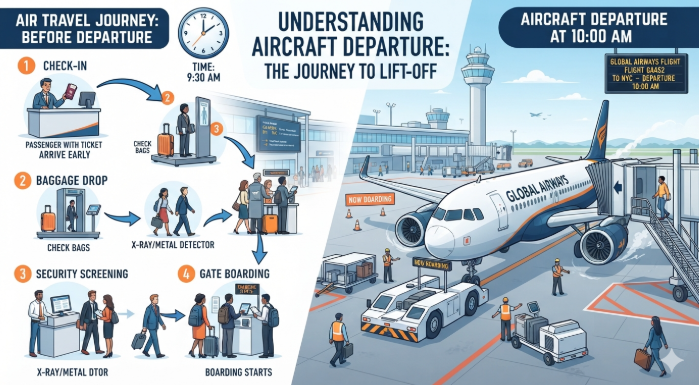
The airport departure process includes several important stages. First, passengers check in through an airline website, mobile app, kiosk, or airport counter. Checked baggage is then handed to the airline. After that, passengers pass through security screening. International travelers may also complete immigration procedures. Once these steps are finished, passengers enter the departure area. They should check airport monitors for their gate and flight status. Boarding normally begins before the scheduled aircraft departure. Passengers then line up according to the airline’s boarding process. Staff check boarding passes and travel documents before passengers enter the aircraft. After everyone boards, cabin crew prepare the aircraft for departure. The doors close, and the plane may move away from the terminal. It then follows airport instructions toward the runway. Air traffic control gives the aircraft permission for takeoff. This entire process requires teamwork between passengers, airline staff, airport workers, and air traffic controllers.
What Is a Departure Gate?
A departure gate is the airport area where passengers wait before boarding their flight. Your gate number may appear on your boarding pass, but it can sometimes change. Airport screens provide the latest gate information. Some airports also send gate updates through their mobile apps. After completing security, passengers should check their flight information again. The aircraft departure gate can be located far from the security checkpoint. Large airports may require a long walk, train ride, or shuttle journey. Travelers should consider this when planning their time. Do not assume the first gate shown will remain unchanged. Airlines can move flights because of aircraft operations, airport congestion, or terminal changes. If your gate changes, follow the airport signs and announcements. Arriving at the gate early gives you time to relax and prepare. It also reduces the chance of missing an important announcement. Always keep your boarding pass and travel documents easy to access.
Why Can Aircraft Departure Times Change?
Flight schedules are carefully planned, but many factors can affect the final departure. Weather is one common reason for delays. Strong winds, thunderstorms, fog, snow, and poor visibility can affect airport operations. Air traffic congestion can also slow down flights. Sometimes an incoming aircraft arrives late, causing a later flight to leave behind schedule. Technical inspections may create additional waiting time. Passenger boarding and baggage loading can also take longer than expected. Security issues can affect airport operations as well. In some situations, airlines may change the aircraft departure time for operational reasons. A delay does not always mean the flight will be canceled. Airlines normally provide updates through airport displays, text messages, emails, or mobile apps. Travelers should check these sources regularly. It is also wise to avoid relying only on the original booking time. Current flight status information provides a better picture of what is happening.
Actual Departure and Scheduled Departure
Scheduled departure and actual departure are not always the same. The scheduled time is the planned time shown when you book your ticket. The actual departure is when the flight really leaves according to airport or airline records. For example, a flight may have a scheduled departure at 8:00 AM. Weather problems could delay it until 8:35 AM. In that case, the actual departure happened 35 minutes later. Flight tracking systems often show both pieces of information. Understanding this difference is useful when checking a flight’s history. It also helps passengers understand delay information. The aircraft departure may happen close to the scheduled time, but small differences are normal. Airlines measure operational performance using these times. Travelers should focus on the latest official flight update. A displayed delay can sometimes change again. For this reason, passengers should remain prepared until they receive confirmed information. Flight status screens are especially useful during busy travel periods.
How Check-In Affects Departure
Check-in is one of the first important steps before a flight. Many airlines allow passengers to check in online before arriving at the airport. Online check-in can save time at the airport. However, passengers with checked luggage may still need to visit a baggage counter. Travelers should have their passport, identification, visa, and booking information ready when required. Missing documents can cause serious problems. Check-in deadlines also vary between airlines and airports. If a passenger arrives after the airline closes check-in, boarding may not be possible. This can affect the planned aircraft departure for the passenger, even if the flight itself remains on schedule. Checking in early provides more time to handle problems. It may also allow passengers to choose seats or receive updated travel information. Always read your airline’s check-in rules before traveling. Following these rules is especially important for international journeys because document checks can take longer.
What Happens Before an Aircraft Takes Off?
Many activities happen before an aircraft takes off. After passengers board, cabin crew make sure everyone is seated correctly. Overhead bins are checked, and safety procedures begin. The aircraft door is closed when the crew is ready. The plane may then push back from the terminal. A ground crew member helps guide the aircraft during this stage. After pushback, the pilots communicate with air traffic control. The aircraft follows a designated taxi route toward the runway. Other aircraft may be waiting for their turn. Air traffic control manages this movement to maintain safe spacing. The aircraft departure is therefore more than simply leaving the gate. It involves coordination between many airport teams. Pilots complete final checks before takeoff. When clearance is received, the aircraft enters the runway. The engines provide the required power, and the plane accelerates. Once airborne, the aircraft begins its planned climb and continues toward its destination.
How to Check Flight Departure Status
Checking flight status is one of the best travel habits. Airlines usually provide flight information through their websites and mobile apps. Airports also show flight updates on digital departure boards. Travelers can normally search using a flight number or destination. Flight status may show scheduled time, estimated time, gate, boarding information, and delays. Some systems also show when boarding has started. Before traveling to the airport, passengers should check for changes. They should check again after arriving at the terminal. The aircraft departure status can change during the day. Weather and airport conditions may affect estimated times. If the airline sends a notification, read it carefully. A gate change can be just as important as a time change. Travelers should also keep their phone charged. A portable charger can be useful during long waits. Reliable information helps passengers make better decisions and avoid unnecessary confusion.
Tips for a Smooth Aircraft Departure
A smooth airport experience starts with preparation. First, confirm your flight number and travel date before leaving home. Check the latest departure information through your airline. Arrive early enough for check-in, baggage, security, and walking to the gate. Keep important documents in an easy-to-reach place. Wear comfortable clothing if you expect a long airport journey. Keep your phone charged so you can receive airline notifications. After security, check the departure board for your gate. Do not move too far from the gate when boarding is expected. If you need food or shopping, return early. Remember that boarding can close before the scheduled aircraft departure. Listen for announcements because gates and times can change. If a delay occurs, stay patient and follow airline instructions. Staff may provide updated information as the situation develops. Good preparation cannot prevent every delay, but it can make unexpected changes easier to handle.
Aircraft Departure Delays: What Passengers Should Do
A departure delay can be frustrating, especially when passengers have connecting flights. The first step is to stay calm and check official information. Avoid relying only on rumors from other passengers. Airline staff can provide the latest confirmed details. If the delay is short, the original gate may remain active. For longer delays, the airline may change the gate or boarding plan. Passengers with connections should pay special attention to updated information. If the connection becomes impossible, speak with airline staff about available options. Some airlines may provide rebooking support according to their policies. The aircraft departure can sometimes return to its original schedule after a short delay. Therefore, passengers should remain ready to board. Do not leave the airport unless the airline confirms that you can do so. Keep your boarding pass and travel documents available. Most importantly, monitor official notifications. Flight operations can change quickly, and accurate information is the best way to respond.
Why Departure Information Matters for Connecting Flights
Departure information is especially important for travelers with connecting flights. A delay on the first flight can reduce the time available for the next flight. Connection airports may also require passengers to pass through security again. International connections can involve immigration or customs procedures. The amount of connection time needed depends on the airport and itinerary. Travelers should review their full journey before departure. If the first aircraft departure is delayed, check the status of the connecting flight. Do not assume the second flight will automatically wait. Airlines manage connections based on their own operational systems. If you believe you may miss a connection, contact airline staff as soon as possible. They can explain the available options. Some airports are very large, so walking between gates can take considerable time. A longer connection can therefore provide extra protection against small delays. Good planning is particularly valuable when traveling internationally or during busy seasons.
Common Mistakes Passengers Make Before Departure
Passengers can avoid many airport problems by understanding common mistakes. One frequent mistake is arriving too late. Another is confusing boarding time with departure time. Some travelers also forget to check their gate after passing security. Others depend entirely on the original flight schedule. These habits can create problems when information changes. Another mistake is packing important documents in checked luggage. Passports and essential travel papers should remain with the passenger. Travelers should also review baggage rules before reaching the airport. Oversized or overweight bags can cause delays at check-in. Ignoring airline notifications is another common issue. A message may contain an important gate or schedule update. Remember that aircraft departure requires passengers to complete several steps first. Planning enough time for every step makes the journey easier. Even experienced travelers can face unexpected airport problems. A simple checklist can help reduce avoidable mistakes and create a more comfortable travel experience.
Frequently Asked Questions About Aircraft Departure
What does aircraft departure mean?
Aircraft departure refers to the process of a plane leaving its airport for a scheduled journey. It includes activities before takeoff, such as boarding, final checks, pushback, taxiing, and runway departure. The term can also refer to the listed departure time shown on a ticket or airport display. Travelers should remember that the scheduled time is different from the actual time the plane leaves.
Is departure time the same as boarding time?
No. Boarding time normally happens before the scheduled departure time. Passengers must reach the gate early enough to complete boarding. Airlines may close boarding before the plane’s scheduled departure. Arriving at the airport or gate at departure time can therefore be too late. Always check your boarding pass and current airport information for the latest instructions.
How early should I arrive before a flight?
Arrival recommendations depend on the airline, airport, and flight type. International flights often require more time because passengers may need to complete check-in, security, immigration, and baggage procedures. Domestic flights may require less time. Busy airports can also need additional time. The safest approach is to follow your airline’s official airport arrival recommendation.
Why do flights have departure delays?
Flights can be delayed because of weather, air traffic, technical inspections, late arriving aircraft, baggage handling, crew issues, or airport congestion. Some delays are outside the airline’s direct control. Passengers should check official flight status information for updates. Estimated times can change several times before the aircraft finally leaves.
Can the departure gate change?
Yes. Airlines and airports can change gates for operational reasons. Gate changes can happen because of aircraft assignments, terminal operations, passenger needs, or airport congestion. Always check airport screens and airline notifications after passing security. Do not rely only on the gate printed on an older boarding document.
What should I do if my flight is delayed?
First, check the latest official information from the airline or airport. Stay near the assigned gate unless staff provide different instructions. If you have a connecting flight, tell airline staff about your situation. Keep checking notifications because departure times can change again. Staying informed and following staff instructions is usually the best response.
Final Thoughts on Aircraft Departure
Understanding aircraft departure can make air travel much easier. Departure involves more than the moment a plane leaves the runway. Passengers must complete check-in, baggage, security, boarding, and gate procedures first. Flight schedules can also change because of weather, airport traffic, technical checks, or other operational reasons. The best approach is to arrive early and monitor official flight information. Keep your documents ready and pay attention to airport announcements. Check your gate after security and stay prepared until boarding is complete. If a delay happens, remain calm and follow airline instructions. These simple habits can reduce stress and help prevent missed flights. Whether you are a first-time flyer or an experienced traveler, understanding departure procedures gives you greater confidence. Before your next journey, review your airline’s latest instructions and plan enough time for every stage. A little preparation can make the entire airport experience safer, smoother, and more comfortable.