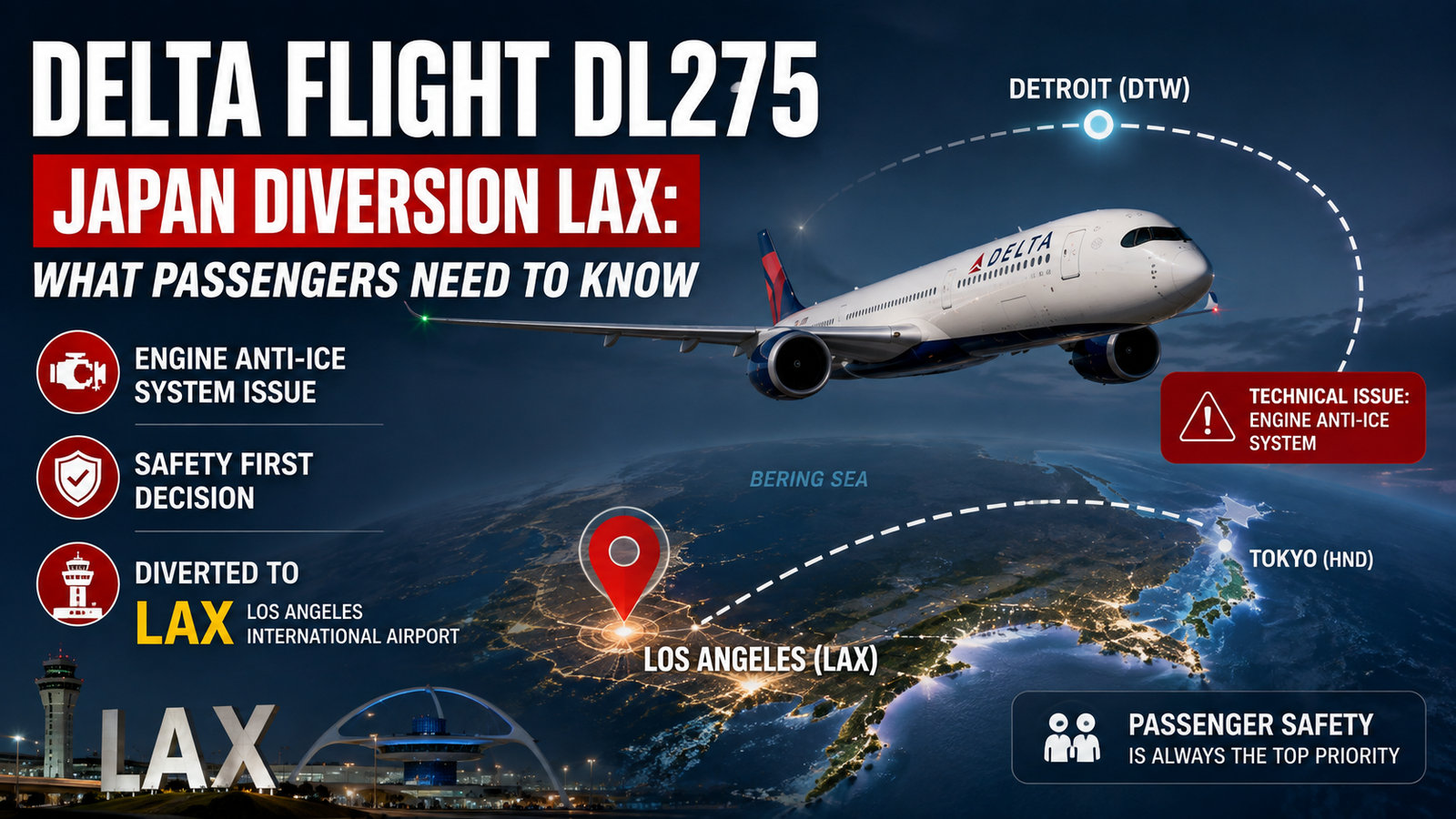
On May 26, 2025, a routine international trip turned into a massive logistical challenge. Flight DL275 departed from Detroit Metropolitan Wayne County Airport (DTW), heading for Tokyo Haneda Airport (HND).
The aircraft never reached its destination. Analyzing the Delta Flight DL275 Japan Diversion LAX reveals a timeline of fast decision-making. The flight crew safely landed the wide-body jet on the West Coast, ensuring zero injuries among the hundreds of passengers onboard.
Why Did the Detroit to Tokyo Flight Reroute?
A sudden technical malfunction forced the pilots to alter their course. While cruising at 38,000 feet, the flight deck received an error message regarding the aircraft’s propulsion system.
Specifically, the Rolls-Royce Trent XWB engine suffered a failure in its anti-ice system. Continuing a transatlantic route with this defect presented a severe hazard. The pilots initiated the Delta Flight DL275 Japan Diversion LAX immediately to protect everyone on board.
The Crucial Role of Engine Anti-Ice Systems
Jet engines operate in extreme conditions. At 38,000 feet, outside air temperatures often plunge below minus 60 degrees Fahrenheit.
An anti-ice system prevents dangerous ice buildup on the engine cowlings and fan blades. Ice accumulation restricts airflow, damages turbine components, and causes mid-air engine shutdowns. Pilots treat any anti-ice failure as a critical emergency requiring an immediate landing.
Identifying the Emergency Over the Pacific Ocean
Location plays a defining role in aviation emergencies. The aircraft flew approximately 620 nautical miles southwest of Anchorage, Alaska, when the warning triggered.
Turning back to Detroit required flying across the entire North American continent. Pushing forward to Tokyo meant navigating across the open ocean without reliable backup airstrips. The crew recognized that the Delta Flight DL275 Japan Diversion LAX provided the safest escape route.
Why Pilots Chose Los Angeles (LAX)
Los Angeles International Airport stands out as a primary maintenance hub for Delta Air Lines. The facility houses certified mechanics trained specifically on the Airbus A350-900.
LAX offers long runways, stable weather, and massive emergency response teams. Choosing this specific airport during the Delta Flight DL275 Japan Diversion LAX guaranteed that engineers could fix the Rolls-Royce engine quickly. The airport also provided superior hotel accommodations for stranded travelers.
Comprehensive Flight Data Table
Tracking the Delta Flight DL275 Japan Diversion LAX specific details helps travelers understand the scale of this event. Review the exact metrics below.
| Flight Metric | Incident Details |
| Flight Number | Delta Air Lines DL275 |
| Original Route | Detroit (DTW) to Tokyo (HND) |
| Aircraft Model | Airbus A350-900 (Tail: N508DN) |
| Cruising Altitude | 38,000 feet |
| Emergency Cause | Rolls-Royce Trent XWB Anti-Ice Failure |
| Diversion Location | Los Angeles International (LAX) |
| Landing Strip | Runway 06R |
Passenger Experience During the Mid-Air Crisis
An unscheduled landing creates heavy stress for travelers. However, flight attendants maintained total order in the cabin. They communicated clearly with passengers about the route change.
Many travelers praised the crew for their extreme professionalism. The calm atmosphere during the Delta Flight DL275 Japan Diversion LAX prevented panic. Pilots secured a smooth touchdown on LAX Runway 06R.
Delta Air Lines Safety Protocols in Action
Global carriers train relentlessly for equipment failures. Delta pilots follow strict checklists provided by both the airline and Airbus.
The successful Delta Flight DL275 Japan Diversion LAX proved these safety protocols work flawlessly. The emergency response included:
- Immediate monitoring of engine heat and pressure indicators.
- Rapid communication with air traffic controllers over the Pacific.
- Coordination with ground maintenance teams at LAX.
- Securing a heavy-weight landing clearance for the wide-body jet.
The crew bypassed closer, smaller airports in Alaska because LAX offered superior technical support. This decision prioritized long-term safety over immediate convenience.
Compensation and Rebooking for Affected Travelers
Delta instantly canceled the remaining leg to Tokyo upon landing. The customer service team stepped in to manage the disruption and reassign tickets.
All affected passengers received rebooking options on alternative flights to Haneda. The airline followed standard policies by issuing hotel vouchers and meal compensations. Resolving the Delta Flight DL275 Japan Diversion LAX logistically required massive ground support from the terminal staff.
How Aviation Mechanics Resolved the Delta Flight DL275 Japan Diversion LAX
After the aircraft parked, maintenance teams took over. They immediately inspected the faulty Rolls-Royce Trent XWB engine to locate the exact breakdown.
Engineers identified the specific anti-ice component causing the error. Following the Delta Flight DL275 Japan Diversion LAX, the jet remained grounded for roughly 18.5 hours while mechanics completed the repairs. After rigorous testing, the Airbus A350 returned safely to commercial service.
What Modern Aviation Learns from These Events
Every diversion provides fresh data for the aviation industry. Engineers use flight data recorders to study component failures and improve manufacturing.
Analyzing incidents like the Delta Flight DL275 Japan Diversion LAX helps manufacturers build better parts. Airlines update their predictive maintenance software to catch similar warning signs before a plane ever leaves the tarmac.
Frequently Asked Questions (FAQs)
What caused the Delta Flight DL275 Japan Diversion LAX?
An engine anti-ice system malfunction triggered the diversion. While cruising at 38,000 feet, pilots detected an error in the Rolls-Royce engine. They rerouted to Los Angeles to ensure complete passenger safety.
Where did the aircraft land safely during the Delta Flight DL275 Japan Diversion LAX?
The aircraft landed safely at Los Angeles International Airport (LAX) on Runway 06R. LAX provided the necessary long runways and specialized maintenance crews for the Airbus A350.
Were any passengers injured during the flight?
No passengers or crew sustained injuries. The flight attendants maintained calm and followed emergency protocols perfectly until the plane reached the ground.
Why did the plane divert to Los Angeles instead of Detroit?
Los Angeles serves as a major maintenance hub for Delta. Continuing to Japan was dangerous, and LAX offered better facilities for Rolls-Royce engine repairs than turning back across the continent.
Did passengers receive compensation after the Delta Flight DL275 Japan Diversion LAX?
Yes, Delta rebooked all affected travelers on alternative flights to Tokyo. The airline also provided hotel accommodations and meal vouchers per their standard delay policy.
How long was the Airbus A350 grounded after the Delta Flight DL275 Japan Diversion LAX?
The aircraft remained grounded for approximately 18.5 hours. Maintenance teams repaired the anti-ice system before returning the jet to active commercial service.
Share Your Flight Experience
Aviation safety relies on transparent reporting and swift pilot action. The successful resolution of the Delta Flight DL275 Japan Diversion LAX highlights how rigorous training saves lives. Check your flight status regularly on your airline’s app, and share this guide on social media to help other travelers understand their rights during unexpected flight delays.